

The price of paying college athletes
By: Kate Pfister
The Ohio State University
Saturdays are for college football. Thursdays and Fridays are for various other college athletics: soccer, volleyball or lacrosse. Many fans join Ohio State athletes throughout the week to watch our world-famous Buckeyes take on various competitors, but it's the time-old question that always gets brought up: Should we allow college athletes to be compensated for their personal brand (NIL) appearances? Ohio State says “yes”, kind of.
What is NIL?
Name, Image and Likeness (NIL) deals pertain to individual athletes being compensated for their personal brand through various things such as brand deals, sponsorships, social media posts or even just general appearances at events.
These deals are important because they are allowing our Buckeye athletes to be paid for their athletic deals. This opens the door to pre-professional brand building, financial independence and a general increase in athlete empowerment.
Pre-professional brand building refers to the ability for athletes to explore their own personal brand through various deals and grow as more than just an athlete. This can be important for athletes who are trying to continue athletics beyond collegiate sports, or during the transition period of college to work-life.
NIL deals allow more financial freedom, meaning athletes who are constrained by the costs of high-level D1 school tuition are now able to both play the sport they love, but also pay for the schooling they deserve. It sets athletes up for success in the future by allowing them to save for their post-athletic careers.
On a broader scale, NIL deals allow all athletes to benefit from their athletic talents and successes. These deals allow athletes from diverse economic backgrounds to reap the benefits of their athleticism, not just those families with wealthier standings. These deals were not previously available, and NIL is balancing the playing field.
Who does NIL apply to?
In the past, it was common knowledge that Ohio State University could not directly invest in NIL deals. But as of a court decision in July 2025, Ohio State Athletics is allowed to contribute up to $20.5 million into their NIL deal funds.
Ross Bjork, Ohio State Athletic Director, vowed to allocate $18 million in NIL funds to its athletes. This lump sum of money was not distributed to all athletes though, but rather only to four programs: Football, Men’s Basketball, Women’s Basketball and Women’s Volleyball.
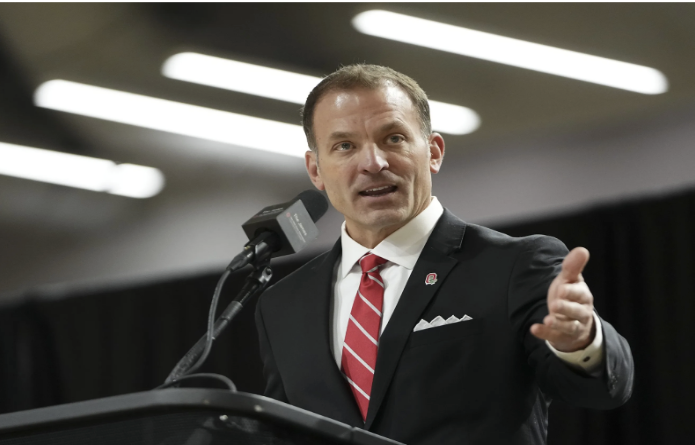
Dispatch.com
Now, this does not mean that only Buckeye athletes in these four programs can receive NIL. It means that the Ohio State Athletics Department only is providing institutional funds to these programs. Why? These four sports are the high-revenue groups.
According to the Lantern and Bjork, the remaining funds will be used for scholarships, and the exact breakdown of NIL funds is not to be discussed with the public due to risk of “narratives” being created.
The main takeaway: All athletes are able to receive NIL deals and funds. Ohio State Athletics will only distribute its NIL funds to four programs, though they are planning to expand in the future.
Drawbacks to NIL
Though there are many positive benefits to NIL deals, it is equally important to recognize all of the issues that come with giving college athletes money. It mainly falls down to unequal opportunity, issues regarding team dynamics, malice intent.
NIL deals are not a guarantee for athletes, meaning that it is highly probable that only a few athletes reap the benefits of the deals, leaving lesser known individuals in the dust. This can still cause disparities in the team, causing major tension and potentially issues even in athletic performance.
Additionally, college athletes are young and not very well versed in law and policy regarding deals. It is very possible that they could be exploited or unfairly compensated and unable or unaware of this malice intent. It would require college athletes to have agents, which throws them into a whirlwind of issues.
Lastly, it is an overall distraction from college athletics. Many individuals believe that a scholarship “should be enough” for athletes, and worrying about personal branding is pointless at that stage of life. Endorsements are believed to distract student-athletes from what is most important to them: academics and athletics.
Conclusion
It is difficult to determine whether NIL deals are inherently good or bad, as there are many factors to be considered. As of now, NIL deals offer financial freedom and personal branding, but also can be a distraction that causes rifts in team dynamics. Ohio State is trying their best to be financially responsible, but also look after all of its Buckeye athletes. There is always a price to pay in college athletics, whether it's a literal monetary price, or the price of having team dynamic that is healthy, competitive and representative of The Ohio State University.
